Resources▾
Leadership▾
Projects▾
Invest▾
Work With Us▾
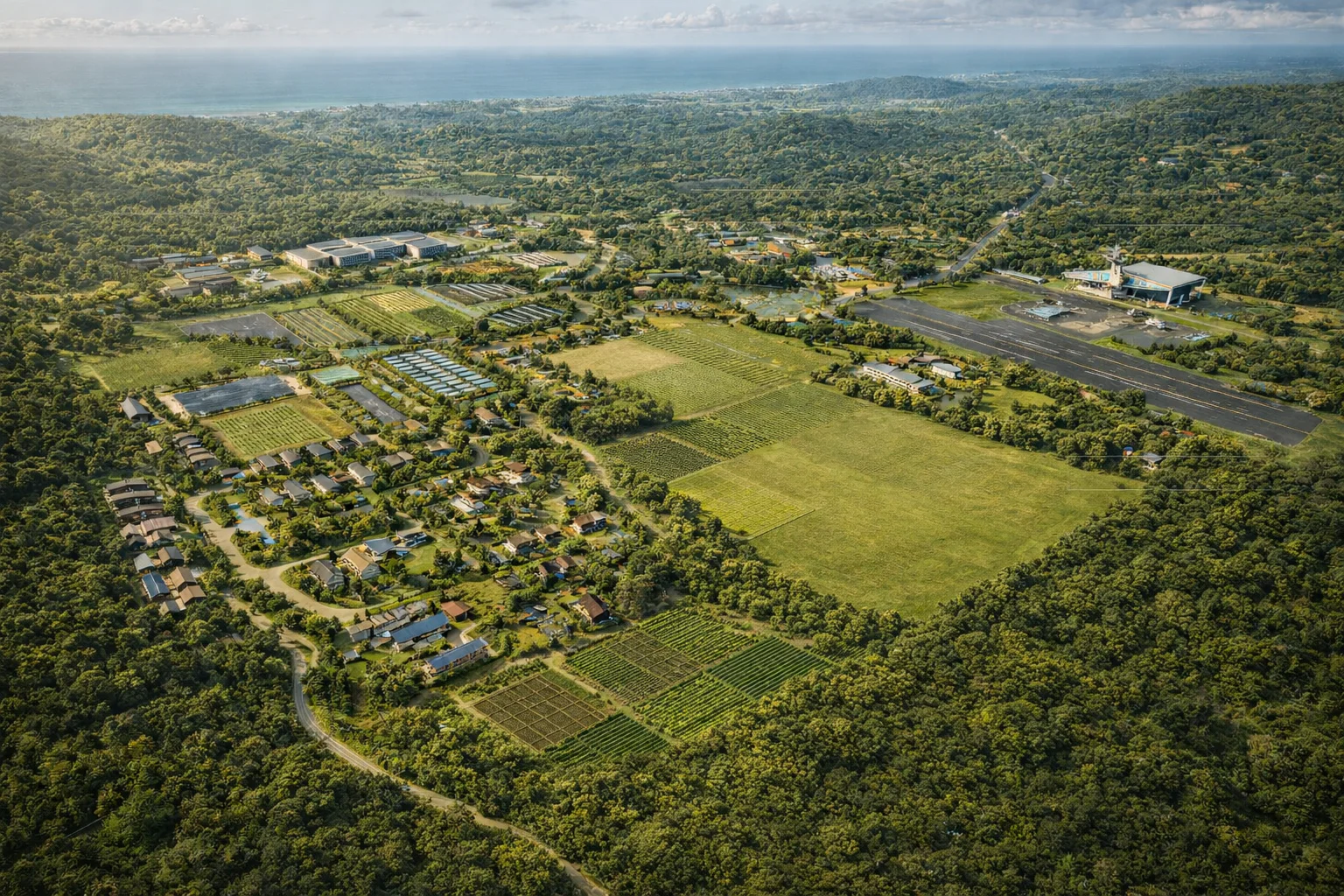
250+ hectares. 8 revenue zones. 555 formal jobs. A 30-bed hospital. A scholarship campus. A 3D hempcrete factory. A licensed aviation facility. A financial model stress-tested through 1,000 Monte Carlo iterations. This is a blueprint, not a vision statement.
Housing, healthcare, and rural employment are under real, well-documented strain across much of the developing world — and the models built to address them are frequently underfunded, short-term, or disconnected from any commercial engine that could sustain them long-term.
ECAHLI's premise is straightforward: an integrated economic ecosystem — where housing, healthcare, education, agriculture, and industry are structurally linked rather than operated in isolation — can generate institutional-grade financial returns while genuinely closing those gaps. Not as a trade-off between impact and return, but because the two are structurally the same thing.
ECAHLI Brazil is where that premise gets tested at real scale.
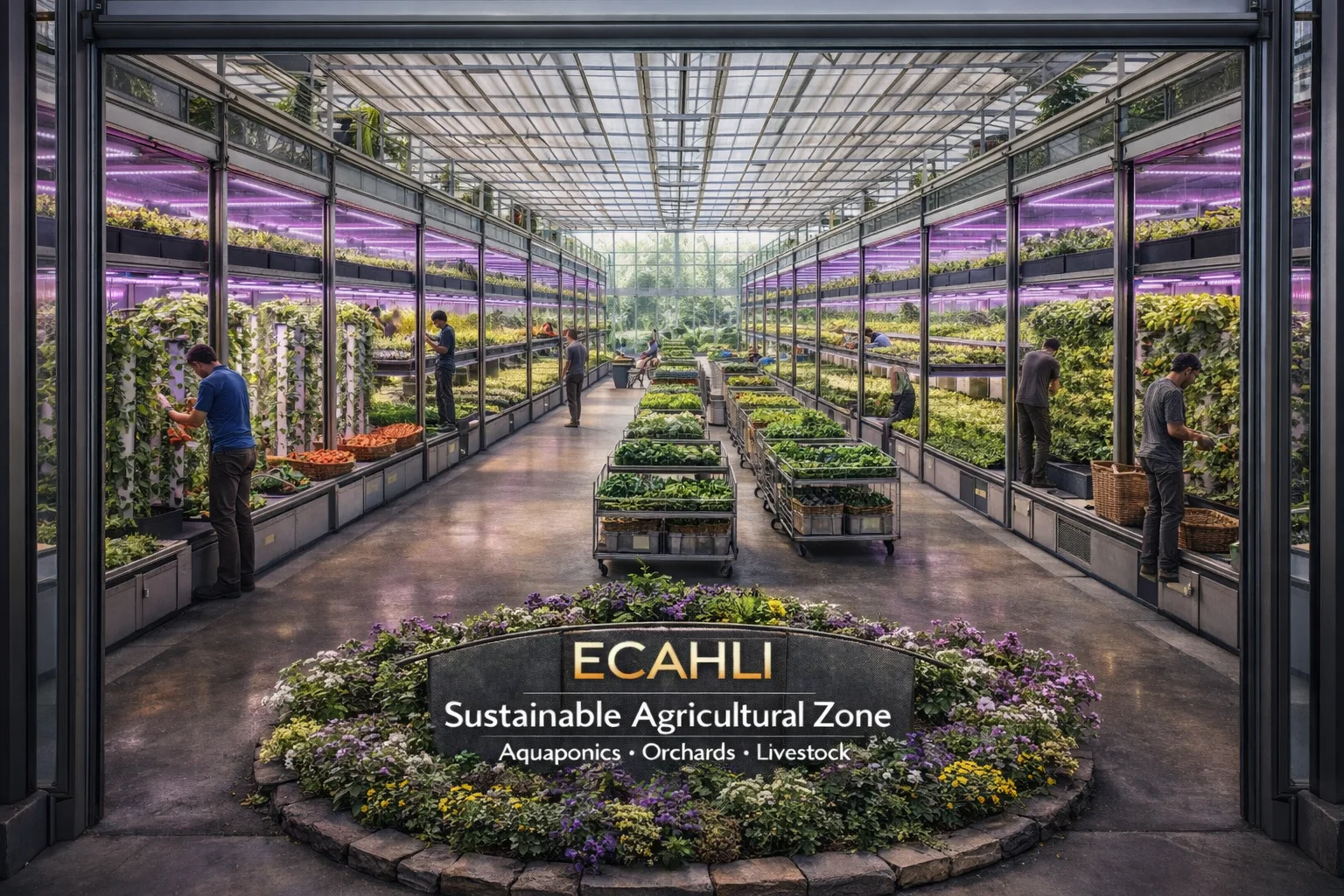
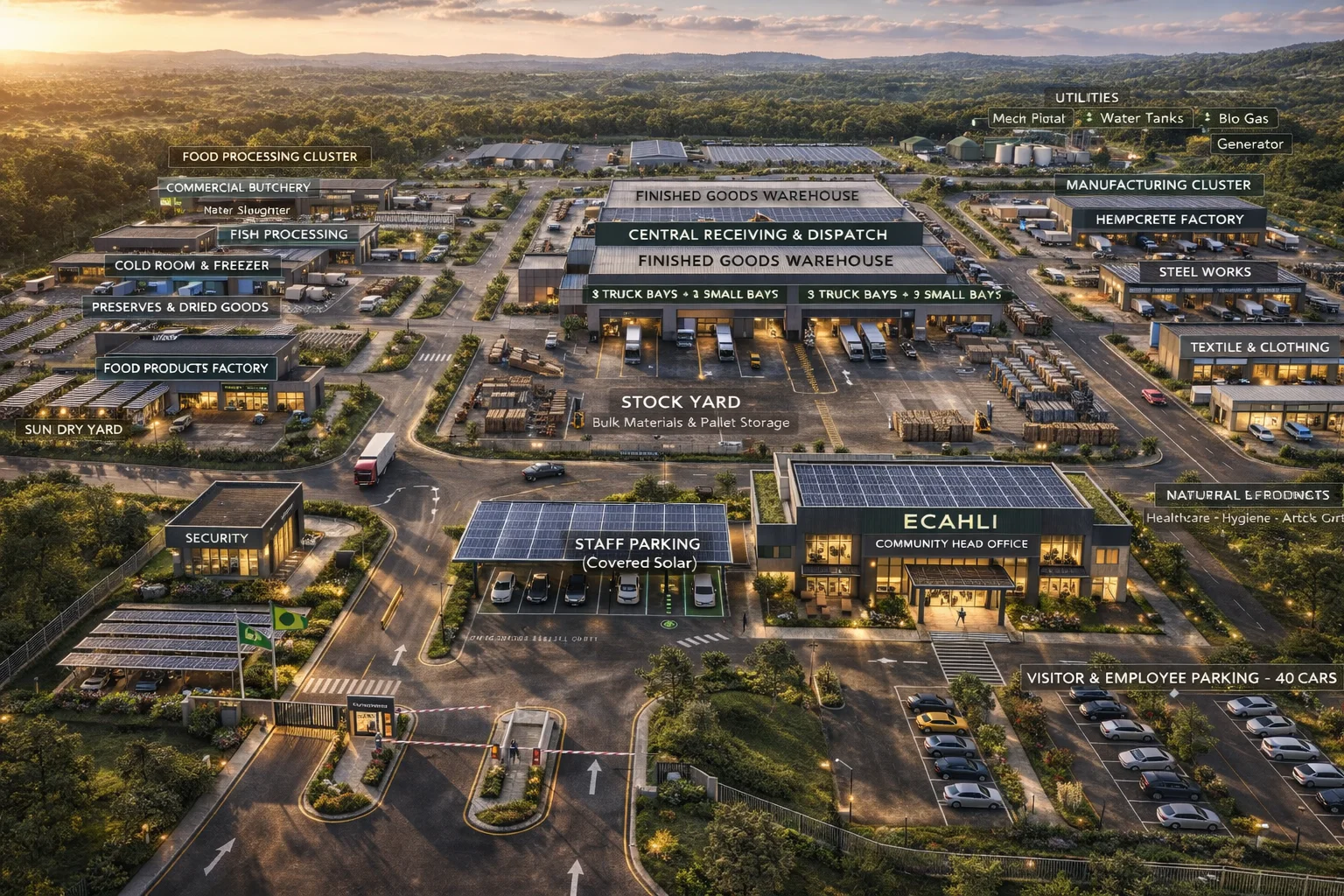
ECAHLI — the Eco-Community Alternative Housing Lifestyle Initiative — is a self-sustaining, technology-driven economic ecosystem designed to generate institutional-grade financial returns while addressing real social and environmental deficits.
The first full-scale flagship is being built on 250+ hectares in Brazil — targeted for full operation in 19 months, profitable from Year 3, generating $49.39M in annual revenue across 8 structurally uncorrelated zones by Year 5. Brazil is the proof-of-concept the wider Node model is built on.
Farms, eco-resorts, rural hospitals, and hempcrete manufacturing all exist elsewhere in isolation. What's structurally different here is integrating all of them into one ecosystem, where the output of one zone becomes the input of the next — the source of the 68.0% EBITDA margin.
3D printing at marginal cost — $6.0M/yr in external sales. INPI patent filed.
555 CLT jobs. Zero housing cost to residents. Rural turnover projected to drop from 35–45% to under 10%.
30-bed private hospital. $5.0M/yr. Regional healthcare anchor with medevac via the on-site airstrip.
20+ ha cultivated. $9.1M/yr. Zero food cost to the community. Biodigester feedstock. First harvest Month 15.
1,825 MWh/yr by Year 3. Zero organic waste. 200t CO₂ offset. Surplus energy sold to neighbouring grid users.
6 adult programmes, 10 trade apprenticeships, 355+ external students/yr — PRONATEC government-funded.
ANAC-licensed airstrip. Medevac, cargo, executive aviation, and agricultural drone services. $1.15M/yr.
External 3D hempcrete builds for third-party developers and municipalities. $2.5M/yr by Year 5, growing.
The financial case for ECAHLI Brazil is built on a model run through 1,000 Monte Carlo simulations and tested against adverse scenarios stacked simultaneously, not individually.
Revenue −20%, OPEX +20%, BRL depreciation to 4.0, CBD registration denied, and a 6-month delay — all at once. The model still produces $9.3M EBITDA above all debt obligations, with DSCR holding at 2.34× — almost double the typical lender minimum.
95%+ probability of positive cash flow above all debt service across every simulated outcome. The P5 (worst 5%) floor still shows $9.3M EBITDA against $3.97M in debt service.
The $78.1M total capital requirement is structured across three sources, with no unfunded gap in the plan as modelled.
555 people in formal employment. Hundreds of families housed. Thousands of healthcare patients served annually. A model designed to replicate to other regions using the same governed architecture.
ECAHLI's eBooks, audiobooks, and Community Handbooks are free, in 7 languages, and live in one central downloads folder updated automatically. The Business Plan and Financial Model are available by application.
All books, audiobooks, handbooks & articles — one link, always up to date.
Contact investment@ecahli.com for the Business Plan, Financial Model, additional translations, or verified investor access.
ECAHLI Brazil is investment-ready. The financial model is complete. The capital structure is defined. The construction programme is planned. We invite investors, residents, and partners to be part of it.
All financial figures sourced from the ECAHLI Brazil Financial Model v19 Final (April 2026). This page does not constitute a public offering of securities in any jurisdiction. Documents and figures available on request to verified institutional investors.
Eco-Community Alternative Housing Lifestyle Initiative — a living, working, self-sustainable community platform where people have everything they need to flourish, governed by the ECAHLI Community Handbook and built for a 50-year horizon.
Investor and partnership inquiries reach the founding team directly — no call centre, no delay.
© 2026 ECAHLI. All rights reserved.