Real ground. Real governance. A legacy built to outlast the deal.
ECAHLI is a sustainable green economic platform and a movement for humanity. Our aim is to convert underdeveloped land into fully governed, revenue-generating communities — ECAHLI Nodes — replicated across Africa, Latin America and Europe. Seven years of design and planning; now beginning to build.
Every ECAHLI Node is staged, governed and disclosed individually. Growth follows what has already been proven — not the other way round.
Diversified revenue. Asset-backed land. A replicable model.
Governments, DFIs, corporates, funds and local partners engaging with a governed, staged development platform.
View the Platform →A movement for a healthier, more sustainable future.
Individuals, families, professionals, human rights organisations and civil society partners building a different way of living.
Join the Movement →All financial figures shown are outputs of ECAHLI's own internal models at the version stated — not audited, consolidated, or independently verified. No ECAHLI Node has completed an operating cycle. Modelled outcomes are projections based on stated assumptions, not a forecast, promise, or guarantee of performance. Full models and assumptions are available to qualified counterparties on request.
Two legal entities. Two sides. Three divisions.
Institutional partners and rights organisations both ask the same first question: who actually holds what, and who answers for it. This is the whole answer, on the front page.
ECAHLI Foundation
A Dutch Stichting, currently in the process of registration in the Netherlands. Once registered it sits over everything — protecting ECAHLI's assets, intellectual property, brand and mission integrity, and directly holding Humanitarian-side community property. Governed by a 7-seat Board with defined reserved matters.
ECAHLI Global Holdings
The commercial parent and steward of all ECAHLI Nodes, assets and intellectual property. It operates through locally registered country entities, because every country ECAHLI develops in requires local registration under its own law. Our aim is for Global Holdings to hold 51% in developments by default, with 49% offered as investment.
Humanitarian
Living rights — not ownership — for residents who uphold the ECAHLI Community Handbook: home, work, food, education and retirement security. Property is held by the Foundation. Open to people in host countries and internationally, selected on contribution. This side is funded by the Commercial side; it is not itself a revenue source.
Investment
Capital funds sustainable industries inside Flagship and Regional Nodes, including an affordable-housing tier for local people who want to own their homes. Generates income for investors and local partners.
Development
Smaller-scale Development Nodes built on the same self-sustainable model, where residents buy and own their units directly.
The two sides are not separate charitable and commercial programmes running in parallel. Commercial capital sustains the humanitarian mission, and the communities that mission builds are the workforce and local economy the commercial side depends on. Each side is designed to make the other viable.
One model. Three kinds of Node.
An ECAHLI Node is a complete economic ecosystem — housing, livelihoods, healthcare, education, food and energy engineered to reinforce one another. Nodes differ by scale and ownership, not by standard.
Flagship Nodes
The full-scale anchor Node in each region, carrying the complete integrated model and setting the standard every Regional Node then replicates. One per major region.
Regional Nodes
The replicated platform. Each Regional Node applies the Flagship model to its own region and economy, staged deliberately so that later Nodes draw on the governance and lessons of earlier ones.
Development Nodes
Smaller-scale eco-tourism and residential Nodes demonstrating the self-sustainable model, where residents buy and own their units directly.
Three anchors. One replicable standard.
Our regional Flagship Nodes — the full-scale reference build for Africa, Latin America and Europe. All are in planning or pre-development; none is operational.
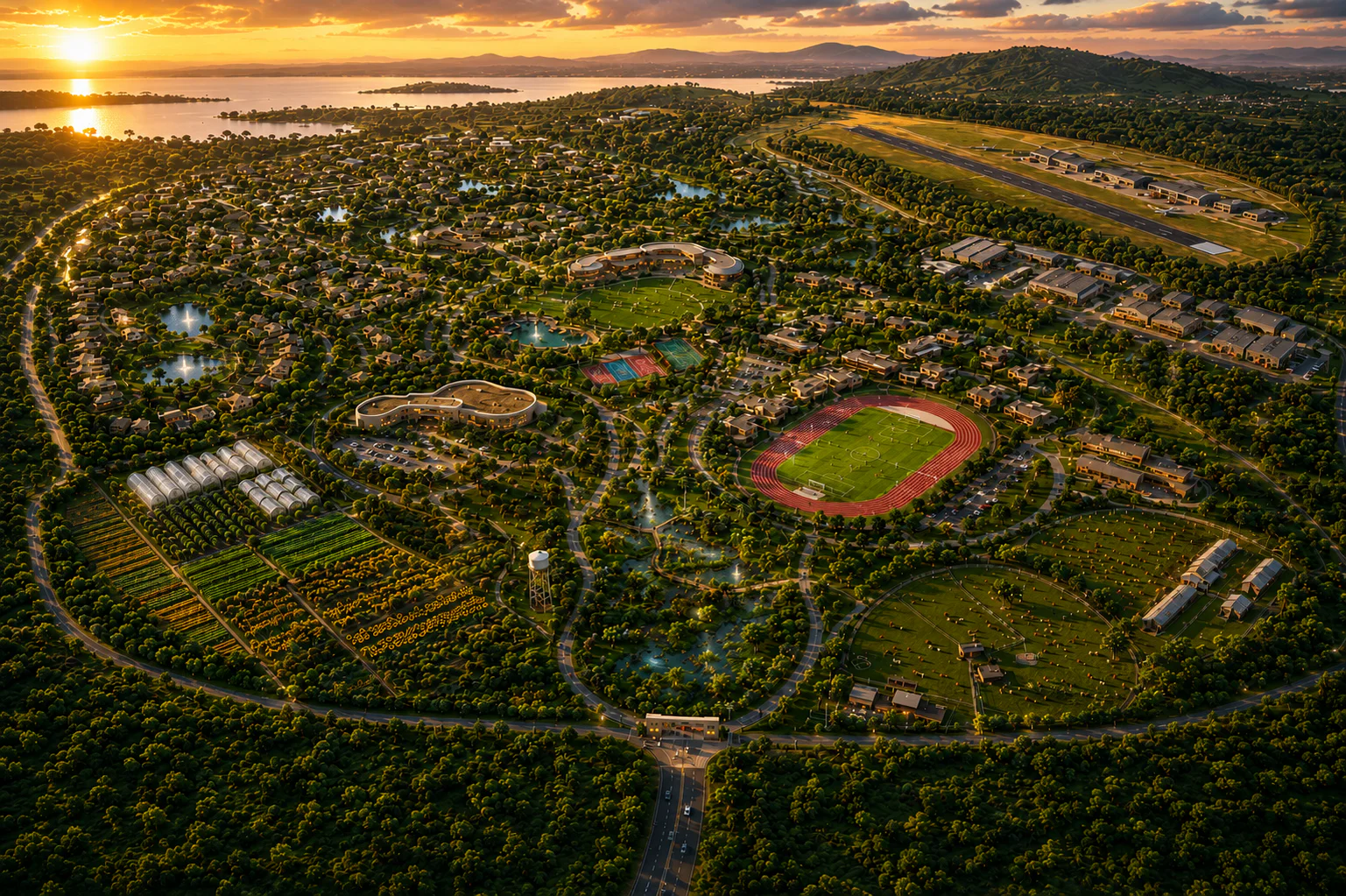
Kisumu African Flagship
ECAHLI's anchor Node for Africa, carrying the full integrated model that the region's six Regional Nodes are designed to replicate. Internal financial model v30 (modelled, not audited): Year 5 revenue $42.8M, 41.5% EBITDA margin, 395 direct jobs.
Explore the African Flagship →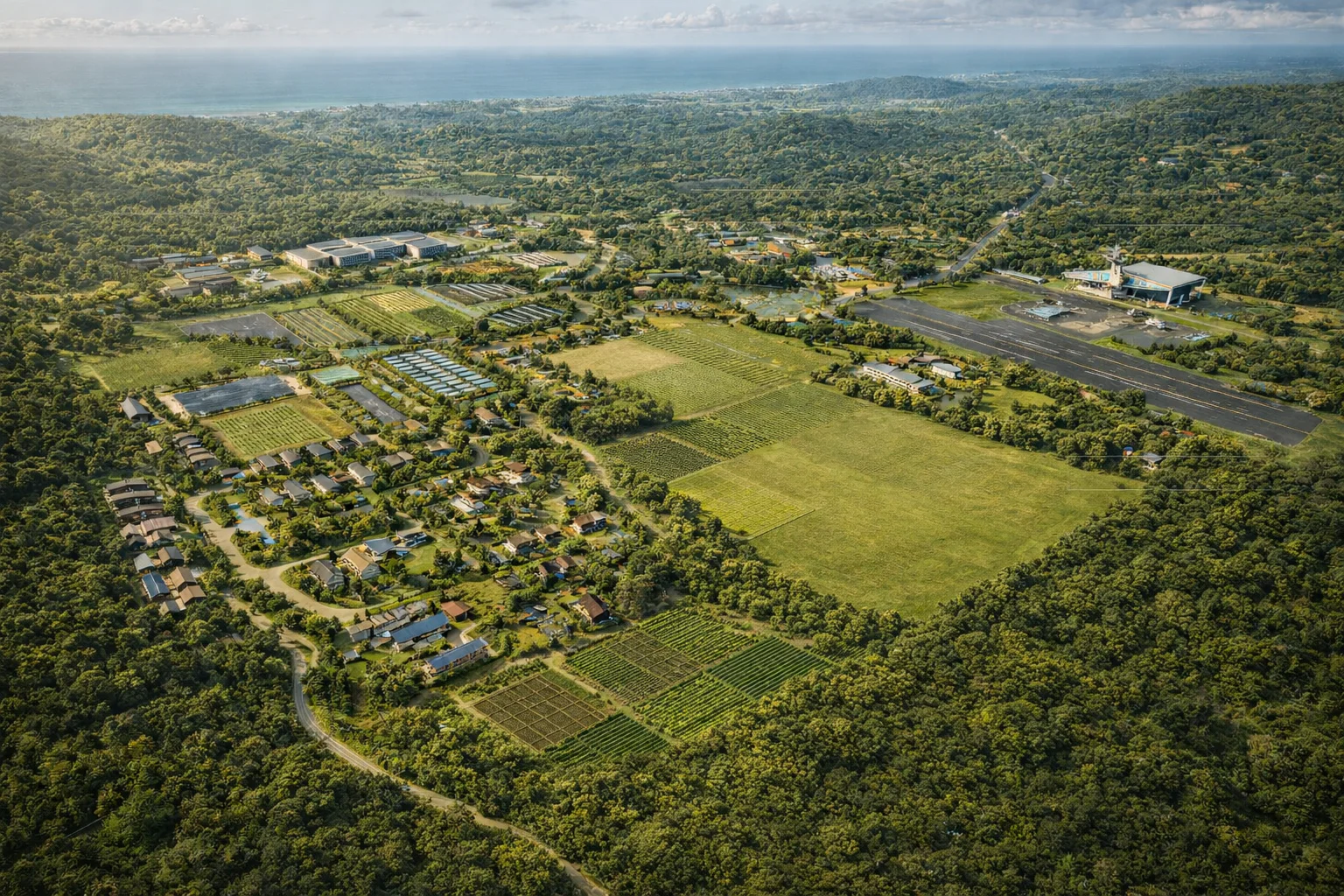
Brazil Flagship
250 hectares secured in Goiás State, with a further 100 hectares in negotiation. Eight revenue zones and a modelled 68% EBITDA margin (v19). Development targeted to commence Q3 2027. Brazil carries more complex legislation and infrastructure requirements than our Kenyan Nodes, and is staged accordingly.
Explore the Brazil Flagship →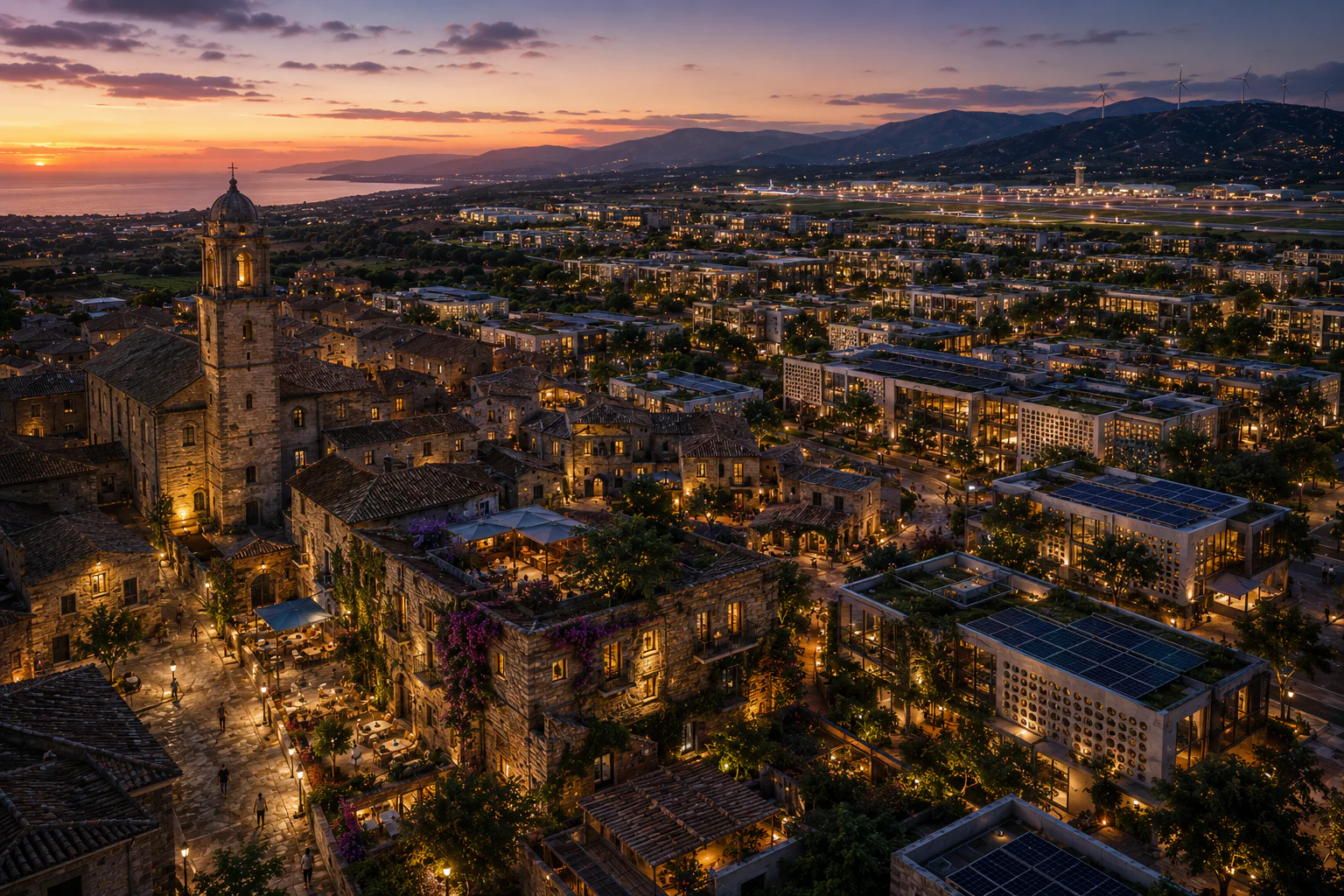
Portugal Flagship
ECAHLI Global Holdings' European anchor Node, alongside two planned Regional Nodes. Portugal is also the intended future operational base for Global Holdings. At early planning stage; no land position is represented as secured.
See the European Pipeline →Where the model is planned to go next.
Our confirmed planning pipeline by region. Every Node listed is at pre-development or planning stage — none is under construction, and each will be disclosed individually as it matures. More regions are in preparation.
Africa
- KenyaFlagship + 6 Regional + 3 Development
- Tanzania3 Regional
- Uganda3 Regional
- Rwanda3 Regional
- DRC3 Regional
- Central Africa3 Regional
Latin America
- BrazilFlagship + 2 Regional
- Paraguay2 Regional
- Uruguay2 Regional
- Peru2 Regional
- Ecuador2 Regional
- Venezuela2 Regional
Europe
- PortugalFlagship + 2 Regional
- Spain3 Regional + 3 Rural Integration Town
- Italy2 Rural Integration Town
Rural Integration Town Nodes apply the model to repopulating abandoned towns and villages, rather than developing new land.
The standards are binding, or they are decoration.
ECAHLI develops in regions where development has too often meant displacement and extraction. Rights organisations are right to ask hard questions of any platform operating here. These are our answers, and the documents behind them.
The ECAHLI Community Handbook
The constitutional document governing every ECAHLI Node — human and worker rights, equality, and a dignified living and working environment. Binding on every resident, employee and contractor without exception, including ECAHLI itself.
Living rights, and a route to ownership
On the Humanitarian side residents hold secure living rights — home, work, food, education and retirement security — with property held by the Foundation rather than by any individual. On the Investment side an affordable-housing tier exists for local people who want to own outright.
No Node proceeds on contested ground
Land status is disclosed individually and honestly on each Node page. No Node is represented as secured until title is confirmed, and our aim is that no Node proceeds without lawful title and the informed consent of the communities it affects.
Named directors, reserved matters, real accountability
A 7-seat Board with defined reserved matters — three seats filled by named Founding Directors, four held open for institutional and strategic partners. Nothing proceeds without Global Holdings and Board approval.
What we do not yet have. Our full policy set — grievance and whistleblowing mechanisms, conflict-of-interest, related-party, anti-bribery and safeguarding policies — is in drafting and will be published here as each is adopted. We would rather name that gap on our own front page than let a partner discover it. Rights organisations wishing to review the Community Handbook or the governance framework in draft are invited to contact us directly.
What is already evidenced, not modelled.
Projections belong in the models. This is the shorter list of things that exist right now and can be produced on request.
250 hectares, Goiás State, Brazil
Land secured for the Brazil Flagship Node, with a further 100 hectares in negotiation. Title documentation available to qualified counterparties under NDA.
25,000 tCO₂e carbon assessment
Measurement, Reporting and Verification completed — a finished, evidenced process rather than a projected carbon claim.
Named legal counsel, Kenya
Musyoka, Shikumo & Associates Advocates LLP act as Kenyan counsel, named with written permission — not a logo on a page.
Governed for confidence. Built for legacy.
We are not a startup chasing attention. ECAHLI is the result of seven years of design and planning, engineered for the long term. Every structural choice below exists to protect that timeline.
Dutch Stichting
Currently in the process of registration — a foundation structure built for long-term institutional governance, transparency, and stakeholder protection.
Board-Driven Strategy
A 7-seat Board with defined reserved matters, three seats filled by named Founding Directors and four held open for institutional and strategic partners.
Transparent Fee Architecture
A defined fee structure and annual participation tied to operational performance, disclosed to every stakeholder before commitment.
Institutional Engagement
Active, deepening dialogue with DFIs and African development banks over recent months. Ongoing engagement, not an established formal partnership — we describe it as what it is.
What could go wrong, and how it's managed.
Institutional partners expect this section, not a highlight reel. Every stage-appropriate risk we're aware of, stated plainly.
Staged land security
Land status differs by Node — some hold secured freehold (Brazil's 250 ha), others are in active negotiation. No Node is represented as fully secured until title is confirmed.
Jurisdictional complexity
Each country carries its own permitting, tax and land-use regime, and requires its own local registration. Timelines are staged accordingly, not assumed.
Staged, not parallel, rollout
The Node pipeline is deliberately sequenced. Later Nodes draw on lessons and governance from earlier ones rather than launching simultaneously.
Modelled, versioned, disclosed
Every figure on this site is drawn from a specific, versioned internal model and labelled as such. Models under rebuild are withheld rather than published. Superseded figures are retired, not left in circulation.
Integrated ecosystems, not isolated projects.
Six systems, engineered to reinforce one another rather than operate as separate line items. Scale varies by Node type; the standard does not.
Premium Housing
Modelled per Node — affordable, modern homes designed to help families build lasting security. Figures vary by Node; see individual project pages.
Integrated Livelihoods
Modelled jobs per Node across agriculture, hospitality, healthcare, energy and education — see each Node's dashboard for current figures.
Healthcare Infrastructure
On-site medical facilities designed for preventive, emergency and community care at each Node.
Education & TVET
Vocational training built into each Node, developing the technical capacity each community needs to run itself.
Regenerative Agriculture
Circular supply chains designed for food security and export income in one system.
Renewable Energy & Water
Off-grid power, water purification and waste management — every Node designed to operate sustainably and independently.
Nothing on this page constitutes an offer, solicitation, or invitation to invest, nor financial, legal, or tax advice. All financial figures are outputs of ECAHLI's own internal models at the version stated and have not been audited, consolidated, or independently verified. No ECAHLI Node has completed an operating cycle, so no figure shown reflects realised performance. Projected returns, margins and timelines are estimates based on stated assumptions and may differ materially from actual outcomes. Land, permitting and regulatory status varies by Node and is disclosed individually on each project page. Ownership percentages describe our intended structure and remain subject to registration, local law and formal documentation. Any participation would be subject to formal documentation, independent due diligence, and applicable law in the relevant jurisdiction.
Recognised before we broke ground.
ECAHLI's community development model has been recognised across three separate international awards programmes — for the design of the model itself, at a stage when most platforms have nothing to show.
Innovation and Research
Global Recognition Awards
Innovative Community Project of the Year
CorporateLiveWire Global Awards
Best Self-Sustainable Community Project
Acquisition International — Paraguay
Named directors. Accountable, not anonymous.
Board seats are filled by named Founding Directors, publicly identified and personally accountable, alongside seats held open for institutional and strategic partners.
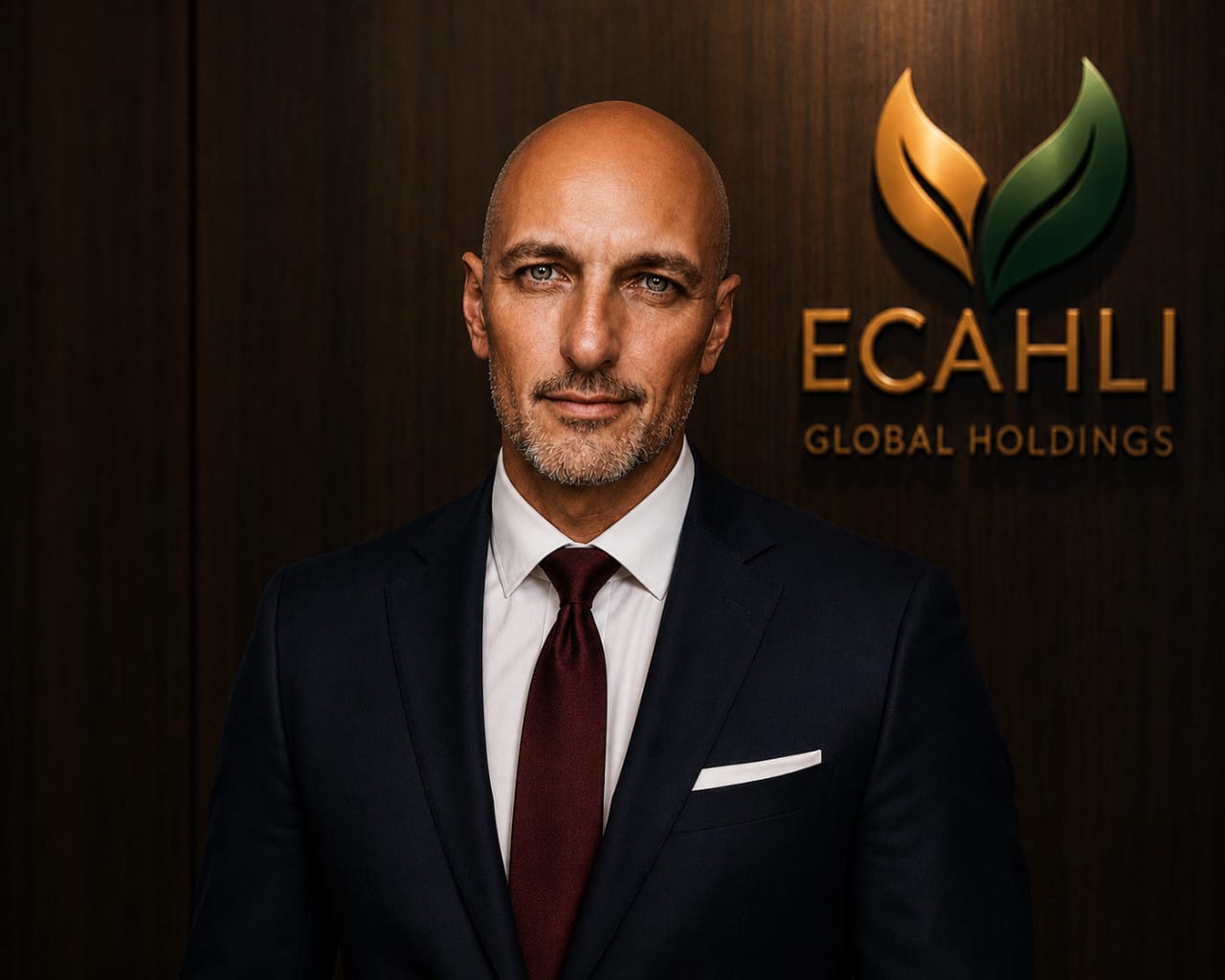
Petrus Van Der Merwe
Founder & CEO, ECAHLI Global HoldingsAuthor of "What Silence Builds." Seven years designing the ECAHLI model across Africa, Latin America and Europe.
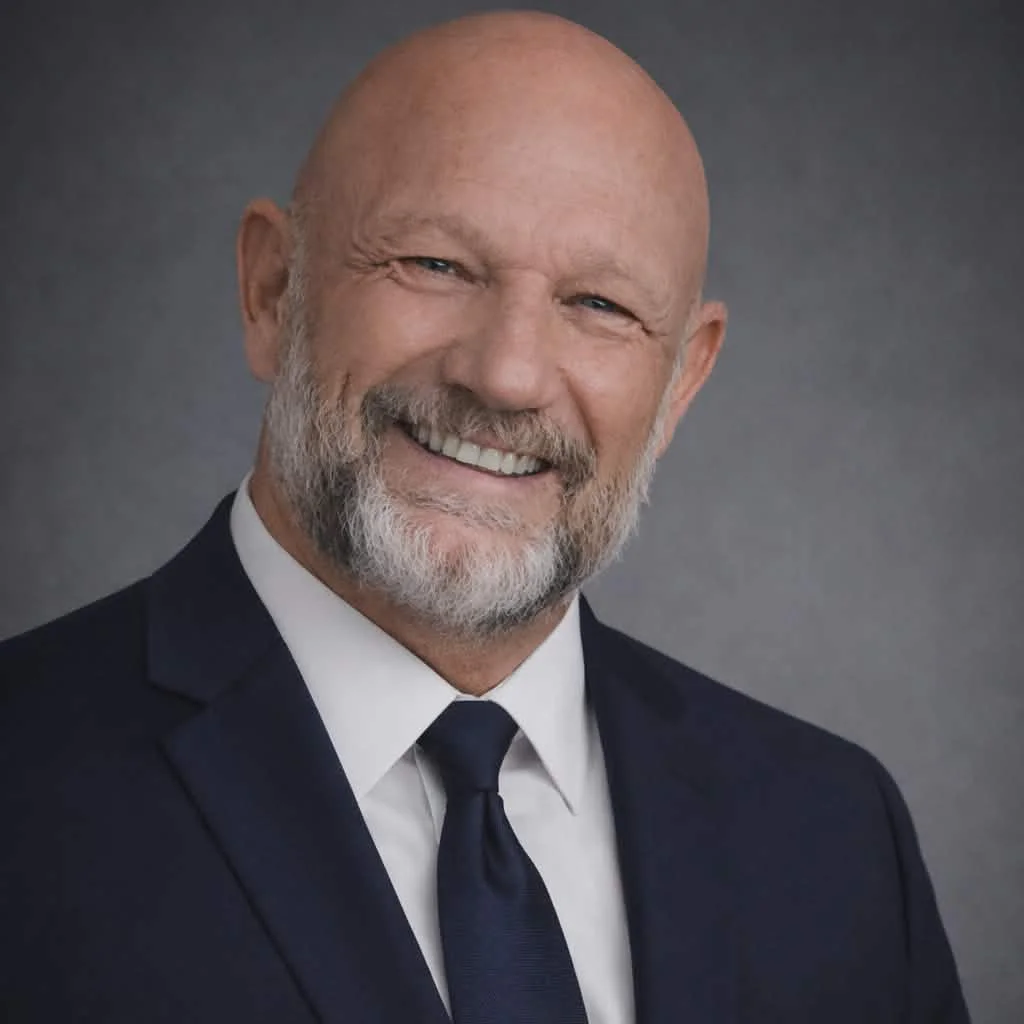
Avery Byron Lillard
Vice Chairman & COOUS-based operations director managing supply chain, logistics, and international partnerships across ECAHLI's footprint.
Housing, work, and community — redesigned for the world we actually live in.
Costs outpace wages. Automation displaces work faster than new work appears. Rural land sits idle while people go without homes. ECAHLI exists because that isn't a set of separate problems — it's one system, and it needs one answer.
Every ECAHLI Node is built to hold housing, work, food, energy and care together in one place — designed to regenerate the land it stands on, not extract from it. This is the same model that makes ECAHLI investable; here, it's the human case for why it matters.
Housing with dignity
Stable, healthy homes with secure tenure — not the cheapest shelter available.
Work with meaning
Skills and pride, not just a wage — tied directly to what the community needs.
Rural regeneration
Underused land and overlooked talent, rebuilt as the foundation of a local economy.
Community over isolation
Local networks that care for elders, children, and the people conventional systems leave behind.
Build the platform. Join the movement.
ECAHLI welcomes institutional investors, governments, development partners, civil society and rights organisations, and aligned leaders ready to build a replicable model — one governed Node at a time.