info@ecahli.com
+595 981 093 123
HQ: Asunción, Paraguay  ·  Dutch Stichting Foundation
ECAHLI Nodes — Governed Eco-Community Nodes for Rural Revival
Self-Sustainable Community Winner 2026 Non-Profit Organisation Award 2025 Innovative Community Project of the Year 2025/26
Rural Futures at Risk · ECAHLI Node Programme
ECAHLI Foundation · Governed Eco-Community Nodes

Where Rural Culture
Is Dying,
ECAHLI Brings It
Back to Life.

One replicable node architecture. Two ways to deploy it. Unlimited futures to rebuild.

Across Spain, Italy, Portugal, Latvia, and much of rural Asia, thousands of towns and villages are quietly emptying out — losing their young people, their services, and their economic reason to exist. Culture and heritage survive on postcards, but they cannot sustain young families, generate formal employment, or hold a community together without an economic engine.

Scroll
2
Node Types · Stand-Alone & Integrated
6
Scheduled Countries
6
Core Technology Systems
30+
Revenue Streams per Node
1,975
Employment Ecosystem per Node
9+
SDGs Directly Addressed
The Reality on the Ground

The Old Economic Model
Has Left Rural Communities Behind.

Thousands of rural towns and villages across Europe and Asia are emptying out — not because the people who live there lack talent, ambition, or attachment to their heritage. They are leaving because the old economic model no longer provides jobs, services, or resilience for young families trying to build a future.

Culture and community do not disappear because people stop caring. They disappear because there is no longer an economic engine underneath them. When the last employer closes, the last school merges, and the last doctor retires, the architecture becomes a museum and the community becomes a memory.

ECAHLI Nodes are designed to reverse this decline — not by preserving the past in amber, but by building a new economic operating system underneath existing communities, or creating thriving new ones where the land is available and the opportunity is right.

Symptoms of Structural Rural Decline
01
No Resilient, Diversified Employment
Seasonal, low-paid, mono-sector economies — dependent on a single crop, a single employer, or a single market — cannot absorb shocks or attract young professionals. Without diversified income streams, rural economies cannot compete.
02
Ageing, Unsustainable Infrastructure
Buildings, energy grids, water systems, and public services become disproportionately expensive to maintain as populations shrink. Municipalities face impossible choices between maintenance costs and basic service delivery.
03
Culture Without an Economic Engine
Historic streets, traditions, and landscapes retain enormous aesthetic and heritage value — but cannot on their own sustain young families, generate formal employment, or fund the services that make a place liveable across generations.
04
Untapped Sustainability Potential
The same land that is being abandoned could host regenerative agriculture, renewable energy, circular manufacturing, and eco-tourism. The potential is there. What has been missing is a governed, financially viable framework to deploy it at community scale.
Abandoned rural town — before ECAHLI Before
Abandoned — Economically Stranded Heritage intact. Economic engine gone. Young people absent.
ECAHLI Integrated Node — after transformation After
ECAHLI Integrated Node — Alive Again Heritage preserved. New industries embedded. Community thriving.
What Is an ECAHLI Node?

One Node Architecture.
Two Ways to Deploy It.

An ECAHLI Node is a self-sustaining green economic ecosystem — an integrated community that combines affordable housing, essential services, productive industries, and verified environmental impact under a single governance and business model. Each Node is directly responsible for its own affordable housing community, services, and production zones, and reports upward through its Regional Flagship to ECAHLI Global Holdings.

Every Node is built on the same technology backbone and measured through the same impact framework, so investors and governments can compare Nodes like assets in a global portfolio.

Node Options

Stand-Alone or Integrated.
Both on the Same Engine.

The ECAHLI Node architecture has two deployment modes — each using the same six core technology systems, the same governance framework, and the same impact measurement methodology. The choice between them depends on what already exists on the ground.

Stand-Alone Node

Building a New Community
from the Ground Up

A Stand-Alone Node is developed on available land — greenfield or degraded — as a complete ECAHLI community with new housing, services, infrastructure, and industries built from day one. This is the right choice where land is available but existing infrastructure is limited, absent, or not worth preserving. Brazil, Paraguay, and Kenya are all Stand-Alone deployments.

  • Full deployment of ECAHLI's six core technology systems from ground up: 3D hempcrete printing, solar microgrid and batteries, biodigester and circular waste, regenerative agriculture, closed-loop water, and a community IoT platform.
  • Multi-sector production zones covering housing, healthcare, education, agro-industry, circular manufacturing, hospitality, logistics, and renewable energy — all planned and built together as one integrated system.
  • Economic outcomes: 30+ diversified revenue streams, formal employment at above-minimum wages, local procurement embedded in the supply chain, and ESG-aligned verified revenue from carbon credits and sustainability-linked services.
  • Social outcomes: guaranteed housing for all residents, on-site health and education facilities, and zero cost of essential utilities — power, water, and connectivity — for residents in the base model.
Integrated Node

Weaving ECAHLI into
Existing Villages and Towns

The Integrated Node is designed for places like Spain, Italy, Portugal, and Latvia — where abandoned or shrinking villages have valuable architecture, cultural heritage, and infrastructure that is worth preserving. ECAHLI inserts new eco-buildings, services, and industries between the historic structures, so the new complements the old rather than replacing it.

  • Preservation and adaptive re-use of structurally sound historic homes, civic buildings, and public spaces — protecting local identity, cultural memory, and heritage value while making them economically viable again.
  • Installation of the same six core ECAHLI technology systems and production zones as a Stand-Alone Node, tuned to local planning regulations, climate, and heritage requirements.
  • Revival of rural economies by combining heritage eco-tourism, regenerative agriculture, circular manufacturing, remote-work hubs, and community services — creating layered, resilient income streams within the existing landscape.
  • Community outcomes: young families can stay or return, new residents and workers can move in, and the local culture becomes economically self-sustaining — rather than frozen in time for occasional visitors.

Whether stand-alone or integrated, every ECAHLI Node runs on the same production engines and is measured against the same categories of impact: local economy, employment, housing, education, healthcare and environment.

ECAHLI Spain Node aerial view ECAHLI Spain industrial zone ECAHLI Spain residential village ECAHLI Spain plaza community life
ECAHLI Integrated Node · Spain · Concept Visualisations
Shared Technology & Systems

One Technology Stack.
Local Solutions Everywhere.

ECAHLI's six proprietary systems are deployed in every Node — with parameters adapted to local context, but always measured, audited, and verified against the same institutional-grade framework. Every Node runs the same engine. Every Node publishes the same categories of impact data.

🖨️
3D Hempcrete Printing

Rapid, low-carbon construction using a large-format 3D printer and locally sourced hempcrete mix. Dramatically shorter build time per residential unit versus conventional methods. Superior thermal performance, significantly lower embodied carbon, and lower long-term operating costs for residents.

☀️
Solar Microgrid & Battery

Community-wide renewable energy — solar PV plus battery storage — sized for full residential and operational demand. Zero electricity cost to residents after ramp-up in the base model. 24/7 operational resilience for critical healthcare, water treatment, and food storage infrastructure.

♻️
Biodigester & Circular Waste

Converts 100% of the community's organic waste stream into biogas for energy and digestate for agricultural fertiliser. Zero organic waste to landfill. An additional verified CO₂ offset layer that supplements the Node's carbon credit portfolio and reduces dependency on external inputs.

🌾
Regenerative Agriculture

Integrated farms, orchards, greenhouses, and agri-processing systems providing on-site food security, formal agricultural employment, and carbon-positive land management. Produces food for the community, the clinic, the school, the restaurant, and local markets — closing the food loop inside the Node.

💧
Closed-Loop Water System

High levels of on-site water recycling, greywater treatment, and rainwater capture. Protected natural drainage and zero synthetic pesticides across all agricultural zones. Real-time monitoring of all water flows feeds the community IoT platform — with data available to environmental regulators and carbon registries.

📡
Community IoT Platform

Real-time monitoring across energy, water, health infrastructure, and agriculture — all integrated into a single community dashboard. Automated ESG reporting for institutional investors. Live data feeds for carbon credit verification, academic research, and municipal reporting requirements.

Brazil Flagship — Proven and Verified

The ECAHLI Brazil flagship already demonstrates all six systems at operational scale, with quantified metrics across CO₂ offset, jobs created, residents housed, patients served, students educated, and hectares under regenerative management. Each new Node — whether stand-alone or integrated — will publish its own Sustainability Impact page using the same methodology, enabling direct, like-for-like comparison across the global network.

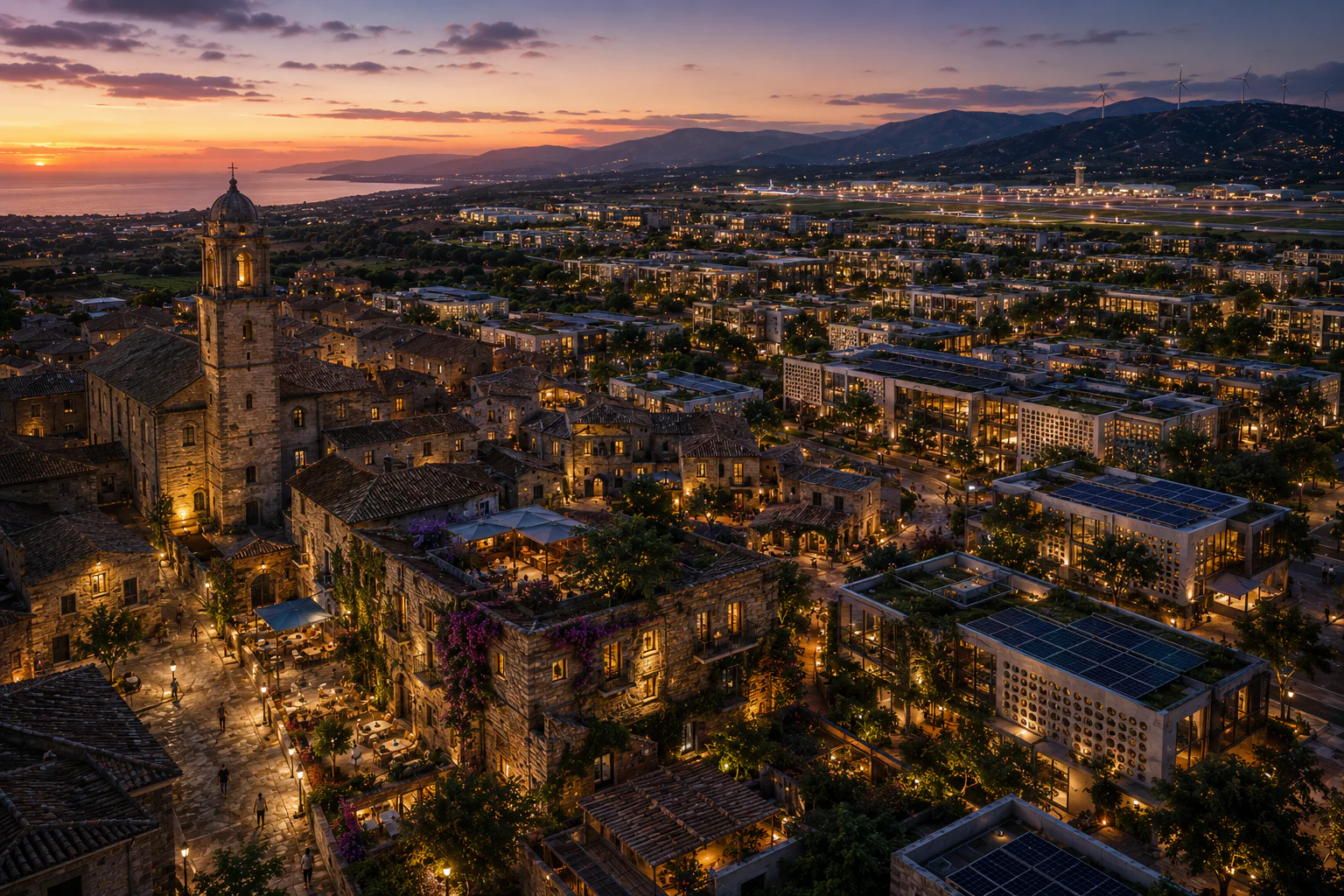
ECAHLI Spain Node aerial view — integrated system
Integrated Node · Spain · Aerial View
The new complements the old. Production zones wrap around heritage streets. The economy returns.

In an Integrated Node, ECAHLI's six technology systems and production infrastructure are inserted into the existing fabric of the village — preserving streetscapes, civic buildings, and cultural identity while activating a new economic engine underneath them.

Impact Framework

Every Node Measured.
Every Community Accounted For.

ECAHLI does not make vague sustainability claims. Every Node builds institutional-grade infrastructure and then measures outcomes across standard impact categories — using the same verification frameworks and audit bodies across all sites, enabling municipalities, governments, and investors to compare performance like assets in a managed portfolio.

💼
Local Economy & Employment

Jobs created by type and sector, wage levels against statutory minimums, formal contract coverage, staff retention, local procurement volume, and new industries established inside the Node perimeter and supply chain.

🏠
Housing & Cost of Living

Residents housed, housing unit mix and typology, build technology and embodied carbon, and the monthly effective cost of housing, energy, and water to residents — in absolute terms and as a share of household income.

🎓
Education & Skills

School-age capacity and enrolment, TVET and vocational training throughput, adult scholarship programmes, apprenticeship contracts, and the share of graduates moving into formal, decent employment within the Node ecosystem.

🏥
Healthcare & Wellbeing

On-site clinic or hospital beds and infrastructure, patients served annually, range of clinical and wellness services offered, and the effective cost of access to healthcare for community members and the wider surrounding area.

🌱
Environment & Climate

Net CO₂ offset or sequestration verified to registry standard (Verra VCS, Gold Standard, or equivalent), renewable energy share of total consumption, land under regenerative management, water recycled, and protected natural areas.

📊
Governance & Transparency

Reporting against TNFD, PSC-G, and SDG frameworks. Community council participation rates, resident voting engagement, dispute resolution records, and annual independent audit coverage — all published in each Node's Sustainability Impact Study.

Every ECAHLI Node will publish a quantified, auditable Impact Study across these dimensions — enabling municipalities, governments and investors to see exactly what their community is delivering.

Per-Node Outcomes · Kisumu Base Case

What One Node
Delivers.

These figures are drawn from the ECAHLI Kisumu flagship base case — the first full deployment of the Node model at institutional scale. Every subsequent Node is designed to replicate and adapt this architecture to local conditions.

450
Homes per Node
1,975
Employment Ecosystem
15,000
Patients per Year
25,000
tCO₂e Avoided / Year
ECAHLI Spain — community plaza and village life
The Integrated Node in Practice

Culture Becomes
Economically Viable Again.

In a functioning Integrated Node, the plaza is not a heritage exhibit. It is the social centre of a living, working community — where residents gather, where visitors arrive, and where the economic life of the village is visible and active. The architecture is the same. Everything else is new.

  • 🏛️
    Heritage Preserved
    Structurally sound historic buildings, civic spaces, and public streetscapes are retained, restored, and made economically useful again — not demolished, not frozen as museum pieces.
  • 🏭
    New Industries Inserted
    ECAHLI eco-buildings, production facilities, energy systems, and service infrastructure are woven into the existing fabric of the village — filling voids, activating courtyards, and complementing the old with the new.
  • 👨‍👩‍👧
    Families Can Return
    Young people who left for cities can return to formal, well-paid employment with housing, healthcare, and education for their children — all within the same village their grandparents built.
  • 🌍
    New Residents Can Arrive
    The Node also absorbs new residents — workers, retirees, remote professionals, and international members — bringing fresh energy and diverse skills into a community that has the capacity and the infrastructure to welcome them.
Global Node Roadmap

Scheduled ECAHLI Nodes
Around the World.

Each scheduled Node will replicate the same technology stack, governance model, and impact measurement framework proven in Brazil — adapted to local regulation, climate, land conditions, and economic opportunity. The architecture travels. The results are local.

🇵🇾
Paraguay Node
Stand-Alone · Latin America

Early-stage deployment of the ECAHLI model in the Colmena District (Paraguarí) and Gran Chaco. Focus on affordable housing, skills development, green industries, and a children's programme in partnership with the national social welfare authority. A live demonstration node is operational in 2026.

🇺🇾
Uruguay Node
Stand-Alone · Southern Cone

Stand-alone node opportunity with strong potential for regenerative agriculture, eco-hospitality, and export-oriented circular manufacturing. Uruguay's regulatory environment, land availability, and agricultural infrastructure make it a natural next step in the Southern Cone expansion.

🇪🇸
Spain Node
Integrated · European Heritage

Integrated Node model targeting abandoned or rapidly shrinking villages in rural Spain — preserving heritage architecture and streetscapes while inserting ECAHLI's full ecosystem of housing, services, and production industries. Eco-tourism, regenerative agriculture, and remote-work infrastructure are primary economic drivers.

🇮🇹
Italy Node
Integrated · European Heritage

Integrated Node model for revitalising historic rural towns and cultural landscapes — combining regenerative agriculture, agri-tourism, circular manufacturing, and community services with the preservation of Italy's extraordinary built and agricultural heritage. Formal engagement with regional and municipal authorities is in progress.

🇰🇪
Kenya Node
African Flagship · Multi-Node Platform

Kisumu, Lake Victoria — the first full-scale institutional deployment of the ECAHLI Node model. Grounded in a detailed business plan and financial model with a 19.3% base equity IRR, 2.99× Year 5 DSCR, and $208M Year 10 terminal value. 450 homes, 395 direct jobs, 200 TVET graduates annually. The benchmark that all other Nodes are measured against.

🇧🇼
Botswana Node
Stand-Alone · African Expansion

Stand-alone node prototype for the African expansion — leveraging Botswana's land availability, renewable energy potential, and stable governance framework. Primary focus on community housing, land-based renewable energy systems, healthcare infrastructure, and skills development for the local population.

"

Every ECAHLI Node is built on the same technology backbone and measured through the same impact framework — so that investors and governments can compare Nodes like assets in a global portfolio, and communities can see exactly what they are delivering and for whom.

Petrus Van Der Merwe — Founder & Lifelong Chair, ECAHLI Foundation
ECAHLI Spain — integrated industrial and production zone
Production Zone · ECAHLI Spain Integrated Node
The industrial zone is not outside the village. It is woven into it — creating jobs inside the community it serves.

Circular manufacturing, agro-processing, energy infrastructure, and logistics form the productive core of every ECAHLI Node — whether stand-alone or integrated. This is what gives culture its economic engine: not heritage tourism alone, but real production with real employment and real community ownership of the output.

The African Flagship

Scaling the Model
Across a Continent.

Kenya is the starting point for the African Flagship — a multi-node country platform anchored in Kisumu on Lake Victoria, with Botswana as a near-term expansion site. These Nodes share the same architecture, technology, and impact measurement as Brazil and the European pilots, and are designed for institutional-grade, DFI-verified ESG outcomes from day one. The Kisumu business plan is detailed, stress-tested, and investable now.
See how the ECAHLI Node architecture is being deployed at scale in Kisumu and beyond.

Investment Enquiries
investment@ecahli.com
General Enquiries
info@ecahli.com
Phone / WhatsApp
+595 981 093 123
ECAHLI Foundation · Dutch Stichting · Asunción, Paraguay  ·  Active Flagships: Kisumu, Kenya · Goiás, Brazil · Colmena, Paraguay · Gran Chaco, Paraguay  ·  Scheduled: Spain · Italy · Uruguay · Botswana  ·  ecahli.com  ·  investment@ecahli.com
ECAHLI Footer