ECAHLI Africa is designed as a flagship demonstration project for sustainable economic development, rural revitalization, and long-term investment in Africa’s future.
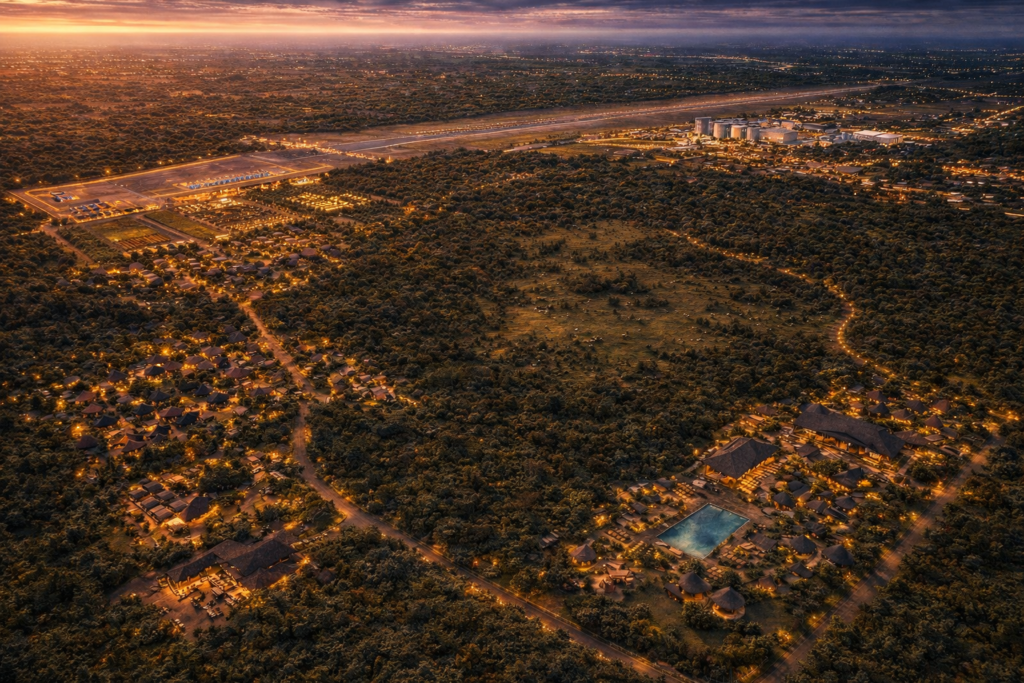
Located on 250 hectares of land, the project combines conservation, community infrastructure, industry, agriculture, education, healthcare, and tourism into a single integrated ecosystem.
The development is structured to show how sustainable communities can operate as real economic engines, creating employment, housing, skills development, and investment opportunities while protecting natural ecosystems.
ECAHLI Africa is not a charity initiative or a traditional development project.
It is a replicable development model designed to work with governments, investors, and local communities to build resilient regional economies.
Africa represents one of the most important economic opportunities of the 21st century.
Rapid population growth, increasing urban pressure, and growing demand for housing, employment, food production, and infrastructure require new development models that move beyond traditional approaches.
ECAHLI addresses these challenges through a complete integrated system that combines:
• sustainable housing
• job creation and industry
• education and skills development
• food production and agriculture
• healthcare services
• tourism and hospitality
The goal is to create economically self-sustaining communities that reduce dependency and provide long-term stability for residents and investors alike.
Total Land Area: 250 hectares
Private Game Reserve: 100 hectares
ECAHLI Development: 150 hectares
The masterplan integrates multiple sectors within one coordinated development framework.
Core Components
• Private wildlife reserve
• Hospitality and tourism district
• Residential community
• Industrial and manufacturing zone
• Agriculture and livestock production
• Education campus and school
• Medical centre and clinic
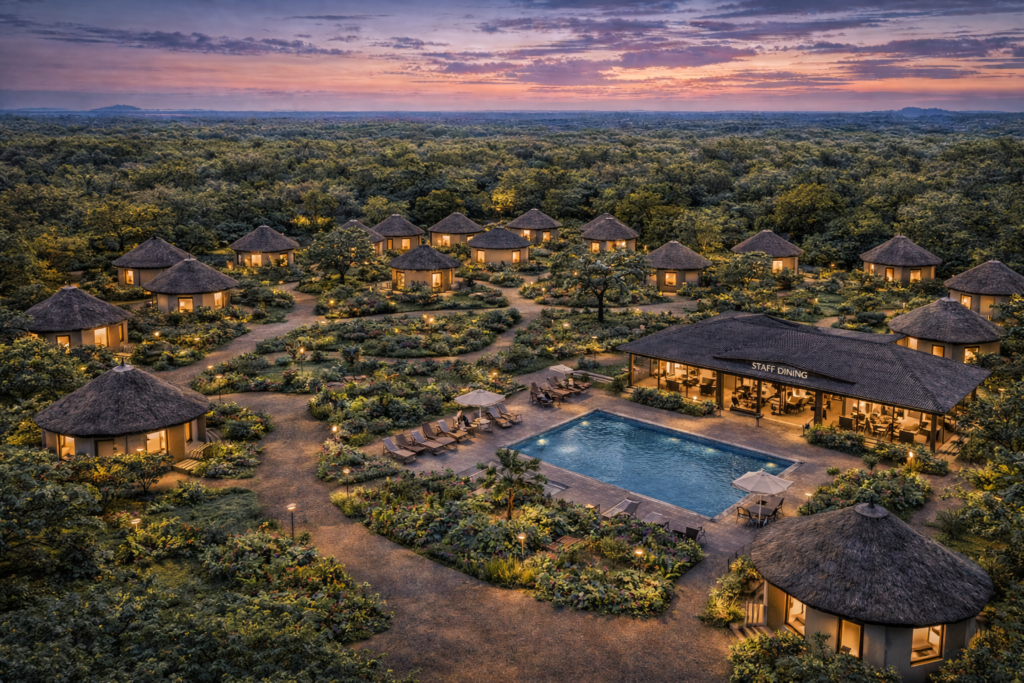
• Staff housing village
• Small regional airfield
Together these components create a complete economic ecosystem rather than a single-purpose development.
At the core of the ECAHLI model is local economic production and job creation.
The industrial zone supports businesses focused on:
• organic food production
• agricultural processing
• sustainable manufacturing
• construction materials
• eco-friendly consumer products
• logistics and distribution
These industries create employment while supporting the agricultural and residential components of the community.
This integrated approach ensures that economic activity, housing, and training opportunities operate as a single system rather than isolated sectors.
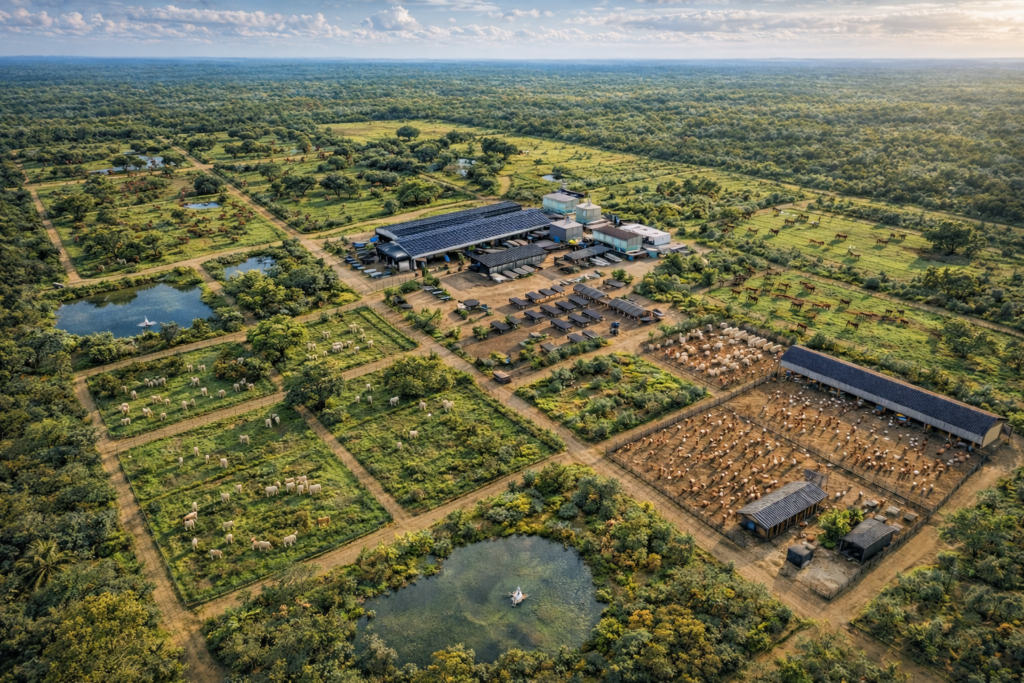
A major component of the development is the agriculture and livestock production zone.
This area supports:
• organic crop production
• greenhouse farming
• sustainable livestock management
• food processing industries
The agricultural sector provides:
• food security for the community
• raw materials for industrial production
• training opportunities for students
• export potential for sustainable food products
The hospitality zone positions ECAHLI Africa as a unique eco-tourism destination.
This district includes:
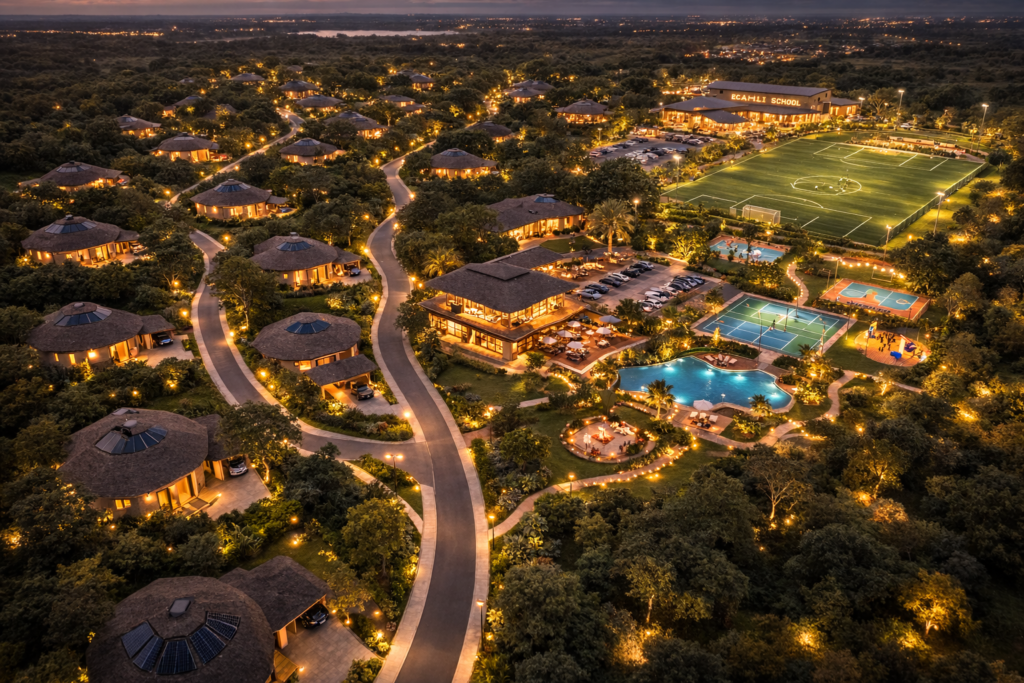
• luxury guest bungalows overlooking the game reserve
• restaurant and outdoor dining areas
• courtyard bar and event spaces
• spa and wellness centre
• natural swimming pool
• Boma amphitheatre for cultural events
Tourism provides an additional revenue stream while showcasing the ECAHLI model to international visitors and partners.
The residential area includes:
• 100 family homes
• 20 retirement homes integrated into the community
The design promotes a multi-generational community environment, supported by education, healthcare, employment, and recreational infrastructure.
The residential component ensures the project supports long-term population stability and workforce retention.
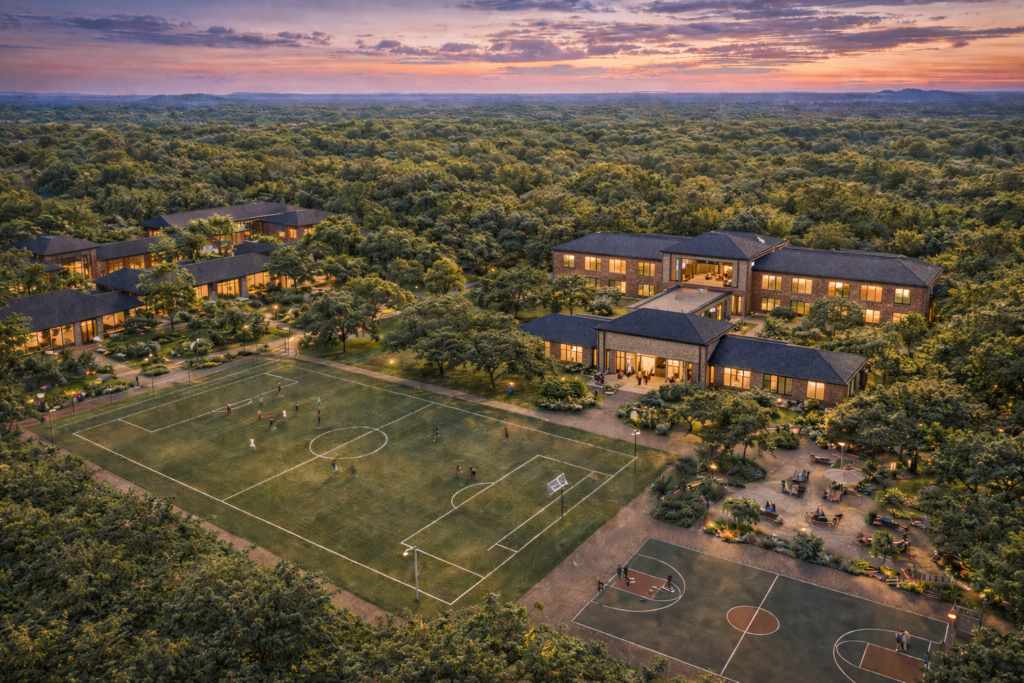
Education and training are critical to the long-term success of the ECAHLI model.
The education zone includes:
School
• 6 classrooms
• dual-lingual education system
Training Campus
• 4 lecture rooms
• 2 meeting rooms
Student Accommodation
• dormitory for 100 students
Training programs focus on:
• sustainable agriculture
• construction technologies
• tourism and hospitality
• entrepreneurship and business development
• technical skills for local industries
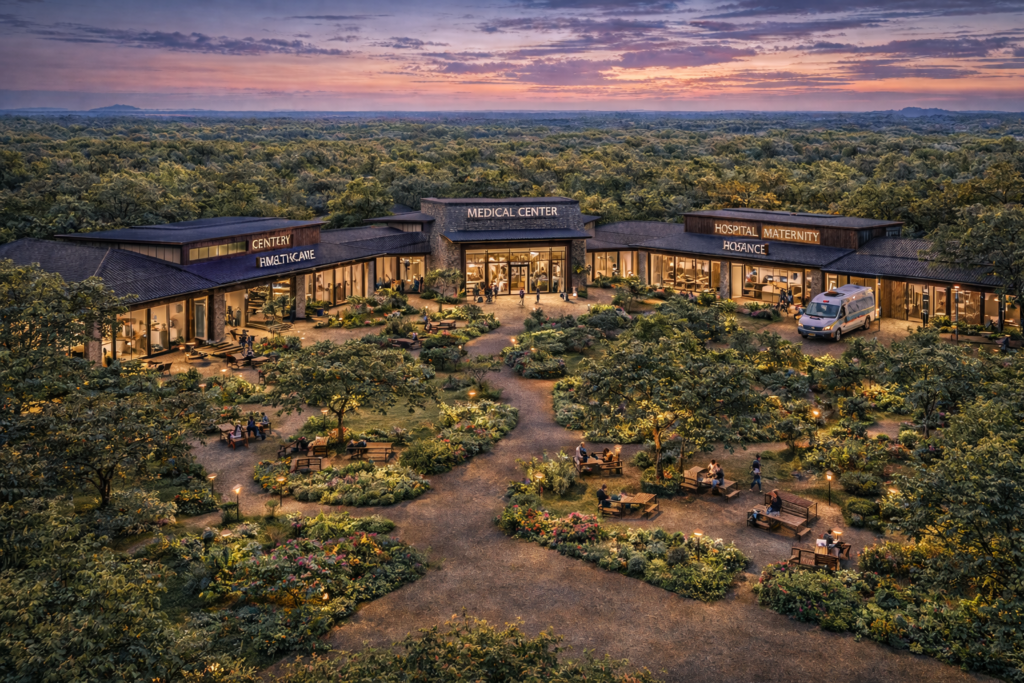
The development includes a community medical centre and small hospital facility designed to serve residents, staff, and surrounding communities.
The healthcare facility includes:
• medical consultation rooms
• dental clinic
• gynecological services
• diagnostic imaging
• pharmacy and medical laboratory
• maternity ward and baby care unit
• inpatient wards
• operating theatres
• physiotherapy and rehabilitation services
To support business and tourism activities, the development includes a small regional airfield capable of serving light and medium aircraft.
This infrastructure supports:
• tourism access
• logistics and supply chains
• regional connectivity for investors and partners
The industrial zone and airport are positioned near the main public road, ensuring efficient logistics access while preserving the natural and residential zones deeper within the property.
Environmental protection is integrated into the development model.
Key sustainability elements include:
• 100-hectare private wildlife reserve
• extensive green zones and tree planting
• sustainable water systems
• renewable energy integration
• organic agriculture practices
This approach ensures that economic development and environmental stewardship operate together rather than in conflict.
ECAHLI Africa is designed to serve as a demonstration project for future developments.
Once proven, the model can be replicated across multiple regions, creating a network of sustainable communities connected through shared knowledge, technology, and economic collaboration.
This scalable approach allows governments and investors to support long-term regional development strategies rather than isolated projects.
ECAHLI Africa is designed for collaboration with:
Governments
• rural revitalization programs
• economic development initiatives
• job creation strategies
• sustainable infrastructure development
Investors
• long-term infrastructure investment
• sustainable industry development
• tourism and hospitality ventures
• agriculture and food production
Technology and Industry Partners
• sustainable construction technologies
• renewable energy systems
• agricultural innovation
• manufacturing and logistics solutions
ECAHLI Africa demonstrates that it is possible to build communities where:
• people have access to housing, work, and opportunity
• industry supports local economic growth
• agriculture provides food security
• education prepares the next generation
• healthcare protects community wellbeing
• conservation protects natural ecosystems
The project represents a practical, scalable solution to some of the most pressing economic and social challenges facing modern societies.
Asuncion, Paraguay
info@ecahli.com
+595981093123
© Copyright 2026 ECAHLI LLC. -- All Right Reserved